
- Welcome to Badmovies.org Forum.
Recent posts
#1
Bad Movies / Re: RECENT VIEWINGS (Bad Movie...
Last post by Rev. Powell - Today at 03:47:51 PMMy plan is working then...  Inflict maximum pain!
Inflict maximum pain! #2
Bad Movies / Re: RECENT VIEWINGS (Bad Movie...
Last post by M.10rda - Today at 02:50:26 PMIn spite of your sober pleas, the film you describe sounds rather irresistible.......!
#3
Bad Movies / Re: RECENT VIEWINGS (Bad Movie...
Last post by Rev. Powell - Today at 01:08:11 PMSWOLLEN CREEK (2025): A woman with a conjoined twin in her torso seeks romance, but runs into an evil insect queen and her fly-headed, dung-harvesting assistant instead. Juvenile zero-budget nonsense made from Halloween masks, toy rubber bugs, and too much free time; half a star for some ingenuity in making something out of nothing, and for making me chuckle exactly once. If you watch movies like this, please stop. If you don't watch movies like this, don't start---not even one. Free on Tubi, Fawesome, etc. 0.5/5.
#4
Entertainment / Re: What have you been listeni...
Last post by Rev. Powell - Today at 11:57:15 AM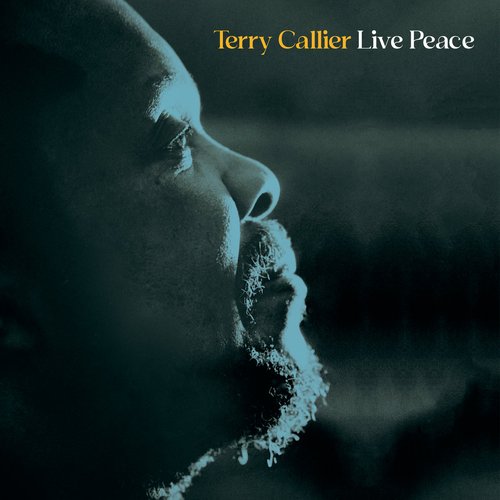

#6
Games / Re: Answer the question with a...
Last post by Rev. Powell - Today at 09:19:16 AMAt

What's your favorite time of year?
What's your favorite time of year?
#7
Good Movies / Re: Recent Viewings, Part 2
Last post by M.10rda - Today at 08:00:01 AMMY STARS (1926):
This is an 11-minute trifle enlivened by the pseudonymous direction of our old friend "William Goodrich" and his characteristic wild action (at times, anyway). Johnny Arthur is an uninspiring-looking boyfriend (so uninspiring that I failed to recall he was the male ingenue in the fun Lon Chaney horror THE MONSTER!) whose girlfriend would rather stay home and stare at glossy 8x10s of male movie stars than go out w/ him. (Actually she comes off as a big jerk and an airhead.) In a desperate attempt to get her attention, Johnny masquerades as a series of 20s heartthrobs and attempts to woo her, only to find each time that she's moved on to a new unattainable crush. When Arthur becomes Douglas Fairbanks, he leaps over walls and literally flies through the air. This part is a lot of fun to watch and clearly required aerial wires, further affirming the spiritual connection between Roscoe movies and Chinese action flicks of the latter 20th century. (Of course Buster never needs wires to leap seven feet in the air and Roscoe is able to make guys fly onscreen just by throwin' 'em.)
The film appears to get bored w/ its own story and ends in a tangent where Arthur and his girlfriend steal and fly an aeroplane (and naturally crash it). Studios kept giving Roscoe a lot of dough to spend on these shorts! 3/5
I'd read that Roscoe had a cameo and had to go back and FF through this a second time to spot him. Indeed he appears as a mailman in a few shots but is tough to recognize because he's lost a ton of weight and looks trim and healthy. (I wish I knew his diet strategy!) MY STARS is thought to have come out in 1926 and by his cameo in 1927's RED MILL he's heavier again but shaves his head of beautiful hair to disguise himself. It's tough to keep the weight off!
This is an 11-minute trifle enlivened by the pseudonymous direction of our old friend "William Goodrich" and his characteristic wild action (at times, anyway). Johnny Arthur is an uninspiring-looking boyfriend (so uninspiring that I failed to recall he was the male ingenue in the fun Lon Chaney horror THE MONSTER!) whose girlfriend would rather stay home and stare at glossy 8x10s of male movie stars than go out w/ him. (Actually she comes off as a big jerk and an airhead.) In a desperate attempt to get her attention, Johnny masquerades as a series of 20s heartthrobs and attempts to woo her, only to find each time that she's moved on to a new unattainable crush. When Arthur becomes Douglas Fairbanks, he leaps over walls and literally flies through the air. This part is a lot of fun to watch and clearly required aerial wires, further affirming the spiritual connection between Roscoe movies and Chinese action flicks of the latter 20th century. (Of course Buster never needs wires to leap seven feet in the air and Roscoe is able to make guys fly onscreen just by throwin' 'em.)
The film appears to get bored w/ its own story and ends in a tangent where Arthur and his girlfriend steal and fly an aeroplane (and naturally crash it). Studios kept giving Roscoe a lot of dough to spend on these shorts! 3/5
I'd read that Roscoe had a cameo and had to go back and FF through this a second time to spot him. Indeed he appears as a mailman in a few shots but is tough to recognize because he's lost a ton of weight and looks trim and healthy. (I wish I knew his diet strategy!) MY STARS is thought to have come out in 1926 and by his cameo in 1927's RED MILL he's heavier again but shaves his head of beautiful hair to disguise himself. It's tough to keep the weight off!
#8
Good Movies / Re: Recent Viewings, Part 2
Last post by FatFreddysCat - Today at 01:51:58 AM"Chopping Mall" (aka "Killbots," 1986)
A group of young mall employees plan an after hours party when the stores shut down for the night. Unfortunately the festivities are interrupted by the mall's trio of high tech security robots, who've turned homicidal after lightning strikes their central computer.
A fun, action packed B-movie classic with the most "80s" premise ever!
A group of young mall employees plan an after hours party when the stores shut down for the night. Unfortunately the festivities are interrupted by the mall's trio of high tech security robots, who've turned homicidal after lightning strikes their central computer.
A fun, action packed B-movie classic with the most "80s" premise ever!
#9
Off Topic Discussion / Re: Alex's even longer post th...
Last post by Dr. Whom - Today at 01:22:07 AMWe all admire your restraint
#10
Bad Movies / Re: Generate Movie Poster with...
Last post by bob - September 22, 2026, 09:47:03 PMjust made this one with copilot, and it looks like the mandated made with AI sticker thing on it is no longer a requirement
